Showing posts with label autoimmune. Show all posts

Monday, 21 November 2016

The Lupus Diet: Benefits, Meal Plan & Recipe Ideas

Lupus diet - Dr. Axe
A large body of research shows that a healthy, unprocessed diet is very important for managing autoimmune disorder symptoms, including those caused by lupus, because it helps control inflammation stemming from poor gut health. The majority of your immune system is actually located in inside your gastrointestinal tract, which is also known as the microbiome, and researchers believe that up to 90 percent of all diseases can be traced in some way back to dysfunction of the gut/microbiome. That’s why if you have lupus, focusing on a lupus diet treatment plan is a major step natural lupus treatment.
As the Lupus Foundation of America puts it, “The scarcity of lupus-specific diet and nutrition information remains a great frustration. But research has given us insight into foods and lifestyle choices that can help diminish the harmful effects of lupus. In particular, there are foods that can affect the body’s inflammatory response.” (1)
A healing lupus diet can help improve gut health in those with lupus by preventing allergies, reducing deficiencies and slowing down free radical damage. In fact, due to how autoimmune disorders develop, a low-processed lupus diet high in antioxidants is usually key for managing any autoimmune-related symptoms, including those due to arthritis, thyroid disorders, etc., which often overlap with lupus symptoms.
Nutrients that are important for managing lupus, such as fiber and antioxidants, seem to have the most beneficial effects when consumed from real food rather than from supplements.  What type of foods are included in a lupus diet? These include healthy fats, plenty of fresh veggies and fruits, and probiotic foods. Considering the fact that lupus can increase your risk for other chronic health problems (for example, women with lupus have a five- to tenfold higher risk for heart disease than the general population!), a nutrient-rich lupus diet can have far-reaching protective effects.

What Is Lupus?

Lupus is a chronic autoimmune condition in which the immune system attacks the body’s own healthy tissue and organs. Depending on the specific patient, lupus can cause high levels of persistent inflammation that can negatively affect various parts of the body. Lupus patients often experience tissue damage that affects the heart, joints, brain, kidneys, lungs and endocrine glands (such as the adrenals and thyroid gland). Although it’s not completely known why this happens, lupus risk factors are believed to include: (2)
  • Genetic susceptibility, having a family history of lupus or other autoimmune disease symptoms
  • Being a woman (90 percent of all lupus patients are women)
  • Being between the ages of 15–45, women in this age range are by far the most likely to develop lupus
  • Being of African-American, Asian or Native American decent, these ethnicities develop lupus two to three times more often than caucasians
  • Eating a poor diet and having nutrient deficiencies
  • Leaky gut syndrome
  • Food allergies and sensitivities
  • Toxicity exposure
Symptoms of lupus commonly include weakness or fatigue, headaches, joint pain, trouble sleeping, digestive issues, and skin rashes. Unfortunately, because lupus can sometimes be hard to diagnose or manage, patients often also suffer from secondary emotional symptoms related to stress, such as anxiety, depression, memory loss and insomnia. (3)
Conventional lupus treatment usually involves a combination of medications used to control symptoms, along with lifestyle changes — like dietary improvements and appropriate exercise. It’s not uncommon for lupus patients to be prescribed numerous daily medications, including corticosteroid drugs, NSAID pain relievers, thyroid medications and even synthetic hormone replacement drugs. Even when taking these drugs, it’s still considered essential to eat an anti-inflammatory lupus diet in order to manage the root causes of lupus, along with reducing its symptoms.

The Lupus Diet: Why You Must Change How You Eat if You Have Lupus

While there’s no one dietary program that can cure or treat lupus for all patients, a healthy lupus diet can go a long way in preventing flare-ups and decreasing complications. Molly’s Fund for Fighting Lupus states that a healthy diet is needed to prevent nutrient deficiencies, maintain strength and energy, combat medication side effects, maintain a healthy weight, and protect the heart. (4)
Inflammation associated with lupus and other autoimmune reactions largely stems from an overactive immune system and poor gut health. Leaky gut syndrome can develop in those with lupus, which results in small openings in the gut lining opening up, releasing particles into the bloodstream and kicking off an autoimmune cascade. This inflammatory process can wind up increasing the risk for many conditions, including heart disease or hypertension, weight gain, joint deterioration, and bone loss, just to name a few. (5)
The epicenter of where inflammation begins is considered to be the microbiome. The human microbiome is a very complex ecosystem of trillions of bacteria that perform essential functions like absorbing nutrients, producing hormones, and defending us from microbes and environmental toxins. These bacteria are constantly in flux throughout our lives, adapting to the foods we eat, the quality of our sleep, the amount of bacteria or chemicals we’re exposed to on a daily basis, and the level of emotional stress we deal with.
Diet is one of the most influential factors in shaping our microbiota because the foods we eat can either contribute to oxidative damage, allergies and deficiencies, or they can boost our immunity, hormonal balance and overall health.
Whole foods, especially the kinds high in probiotics, antioxidants and prebiotic fiber, can lower inflammation by increasing “good bacteria” in the gut, which help with absorption and defending against toxins or bad bacteria. High-antioxidant foods also have anti-aging effects even for those without lupus or another immune disorder because they fight free radical damage that degenerates cells and tissues.
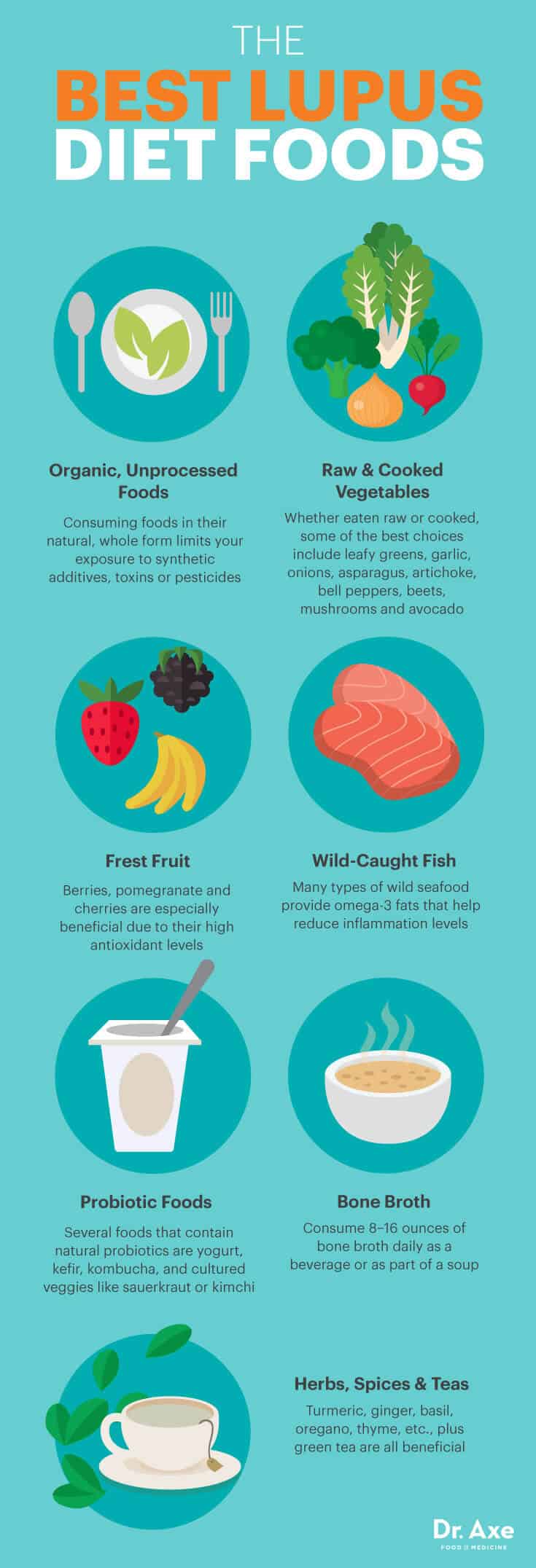
The best lupus diet foods - Dr. Axe


Top Lupus Diet Foods

Best Healing Foods to Eat on the Lupus Diet

Organic, Unprocessed Foods
Consuming foods in their natural, whole form limits your exposure to synthetic additives, toxins or pesticides. These chemicals are very commonly found in packaged products and non-organic foods (even many veggies and fruit!). Because those with lupus already have weakened immune systems, reducing exposure to synthetic hormones, chemicals, medications and heavy metals is usually crucial for recovery.
Raw and Cooked Vegetables
Raw veggies promote an alkaline environment in the body which can help keep inflammation levels lower. They also supply antioxidants, prebiotics, dietary fiber, and many essential vitamins and minerals. Whether eaten raw or cooked, some of the best choices include leafy greens, garlic, onions, asparagus, artichoke, bell peppers, beets, mushrooms and avocado. These help supply nutrients like the vitamin C, selenium, magnesium and potassium you need. Aim for variety and a minimum of four to five servings per day.
Fresh Fruit
Unprocessed fruit (not commercial fruit juices or sweetened canned fruits) are high in vitamins and other important nutrients like vitamin C and vitamin E, which can be hard to get from other foods. Berries, pomegranate and cherries are especially beneficial due to their high antioxidant levels.
Wild-Caught Fish
Many types of wild seafood provide omega-3 fats that help reduce inflammation levels. The best choices are wild salmon, sardines, mackerel, halibut, trout and anchovies. Aim to consume these omega-3 foods about two to three times weekly, or consider supplementing. Just be sure to buy “wild-caught” to reduce intake of things like heavy metals found in farm-raised fish, plus limit intake of fish high in mercury.
Probiotics are the “good bacteria” that populate our GI tracts and help keep us healthy. Several foods that contain natural probiotics are yogurt, kefir, kombucha, and cultured veggies like sauerkraut or kimchi.
Bone Broth
Bone broth has been consumed for centuries and contains numerous beneficial nutrients like collagen, glutathione and trace minerals. It can help reduce autoimmune and inflammatory symptoms that are associated with lupus, including indigestion and joint pain. Consume eight to 16 ounces of bone broth daily as a beverage or as part of a soup.
Herbs, Spices and Teas
Turmeric, ginger, basil, oregano, thyme, etc., plus green tea are all beneficial.
Certain foods can also help relieve skin irritation and dryness, two very common symptoms associated with lupus. Foods to help moisturize skin from the inside out and prevent free radical damage or allergic rashes include:
  • Avocado. Looking for ways to increase your intake? Try these avocado recipes.
  • Nuts and seeds like chia, flax, walnuts and almonds (also great sources of fiber and omega-3s)
  • Coconut oil and olive oil
  • Wild-caught fish
  • Raw milk
  • Berries, cucumbers and melon. Try adding these to homemade green smoothie recipes.
  • Drinking plenty of water, herbal tea and green tea
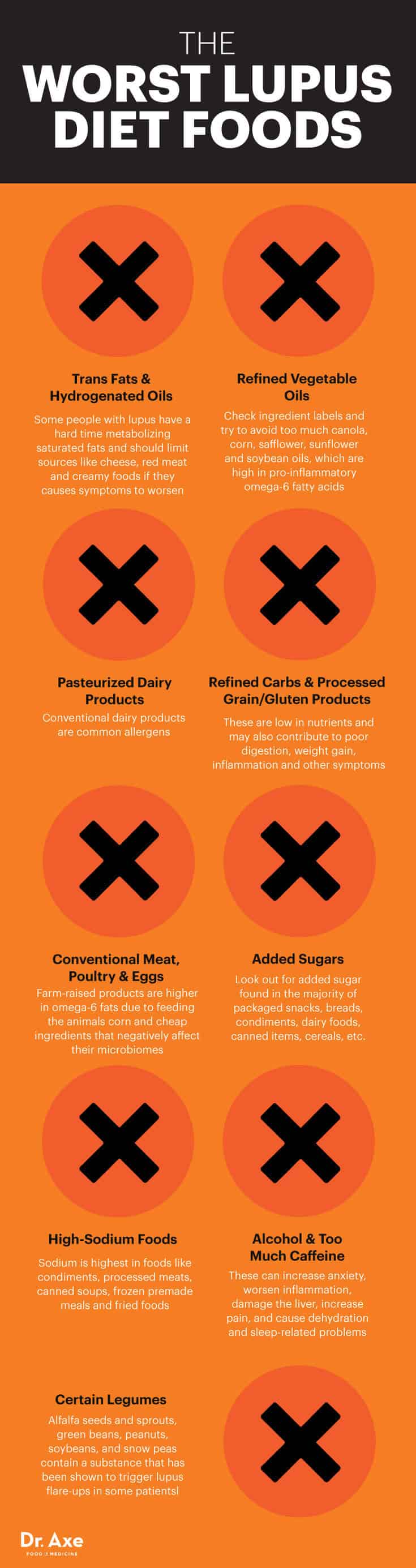
The worst lupus diet foods - Dr. Axe

Worst Inflammatory Foods to Avoid on the Lupus Diet

Trans Fats/Hydrogenated Fats
These are used in packaged/processed products and often to fry foods. Cooking at home more and avoiding fast foods, processed meats, and packaged sweets or cheeses can help you decrease your intake. Some people with lupus have a hard time metabolizing saturated fats and should limit sources like cheese, red meat and creamy foods if they causes symptoms to worsen.
Refined Vegetable Oils
These are very cheap to produce and therefore are used in most processed, boxed foods. Check ingredient labels and try to avoid too much canola, corn, safflower, sunflower and soybean oils, which are high in pro-inflammatory omega-6 fatty acids.
Pasteurized Dairy Products
Conventional dairy products are homogenized and pasteurized to improve taste and reduce natural bacteria, but processing also decreases important enzymes. This is why conventional dairy products are common allergens.
Refined Carbohydrates and Processed Grain/Gluten Products
These are low in nutrients and may also contribute to poor digestion, weight gain, inflammation and other symptoms. Most also contain gluten, a type of protein found in wheat, barley, rye and most flour-containing products. Gluten sensitivity or intolerance is common in those with autoimmune disorders because gluten can be difficult for many people to digest properly, increasing leaky gut syndrome and triggering symptom flare-ups. (6)
Conventional Meat, Poultry and Eggs
When consuming animal products, it’s important to go for high-quality meat. Farm-raised products are higher in omega-6 fats due to feeding the animals corn and cheap ingredients that negatively affect their microbiomes.
Added Sugars
Sugar is known to cause blood sugar fluctuations, can cause moodiness and can be inflammatory when consumed in high amounts. Look out for added sugar found in the majority of packaged snacks, breads, condiments, dairy foods, canned items, cereals, etc.
Because lupus can damage the kidneys, it’s best to try to keep sodium and salt levels low to prevent fluid retention, worsened swelling and electrolyte imbalances. Sodium is highest in foods like condiments, processed meats, canned soups, frozen, premade meals and fried foods.
Alcohol and Too Much Caffeine
These can increase anxiety, worsen inflammation, damage the liver, increase pain, and cause dehydration and sleep-related problems.
Certain Legumes
Alfalfa seeds and sprouts, green beans, peanuts, soybeans, and snow peas contain a substance that has been shown to trigger lupus flare-ups in some patients (although not all). Negative reactions caused by these foods experienced by lupus patients can include antinuclear antibodies in the blood, muscle pains, fatigue, abnormal immune system function and kidney abnormality. These symptoms are believed to be caused by the amino acid L-canavanine. (7)

Other Ways to Manage Lupus Symptoms

Space Out Your Meals
If indigestion is a symptom you commonly deal with, try eating smaller amounts more frequently throughout the day. Aim for four to six smaller meals instead of three larger ones.
Have Small Amounts of Fat at One Time
Because fat can be difficult to digest for those with lupus, try avoiding very high-fat meals. Fats are important for cognitive and hormonal health but may be digested better when spaced out.
Consider Supplementing with Vitamin D
Researchers now believe that vitamin D is an important nutrient needed for immune system health. In fact, vitamin D appears to modulate the immune system’s activity and has effects on things like bone metabolism, cognition and hormone production.
It’s been found that low levels of vitamin D might be associated with increased risk of autoimmune conditions and other chronic diseases, according to a report published in the International Journal of Rheumatology. (8) If you don’t spend much time outdoors, especially during the winter, talk to your doctor about taking a supplement to prevent vitamin D deficiency.
Avoid Smoking Cigarettes and Using Recreational Drugs
These can worsen lung damage and lead to complications.
Stay Active
Gentle forms of physical activity that can be beneficial for people with lupus include about 20–30 minutes daily of brisk walking, swimming, water aerobics, tai chi, yoga, cycling, Pilates or using an elliptical machine.
Keep Stress Levels Low
Emotional stress, life changes and trauma can trigger lupus flare-ups. Research shows that psychological and emotional stress are capable of increasing inflammatory responses that affect the entire body, so use natural stress relievers to keep cortisol levels in check.
Get Enough Sleep and Rest
Make sleep a priority, aiming for seven to nine hours per night. Also reduce stress and fatigue by taking breaks throughout the day to rest and unwind.

Final Thoughts on the Lupus Diet

  • To limit inflammation and poor gut health, people with lupus should try to eat an unprocessed, well-balanced and varied diet with plenty of veggies, fruit, clean proteins, probiotics, fiber and antioxidants.
  • Foods to avoid on a lupus diet include added sugar, refined vegetable oils,  refined carbs with gluten, farm-raised animal products and synthetic additives found in boxed foods. Some also feel better when reducing certain legumes, such as alfalfa, soybeans and peanuts.
  • Those with lupus can help prevent complications like heart disease, joint pain and cognitive/mood problems by reducing intake of processed foods and focusing on fresh or raw foods in addition to moderate intake of healthy fats, grass-fed meats and wild-caught oily fish.

Sunday, 30 October 2016

Brain Saving Foods and Spices


The biggest fear that older people face is Alzheimer’s disease, where memory and cognition begin to fade. I recently reviewed a client’s list of medications and he was taking two drugs to preserve brain function, Aricept and Namenda. These drugs are useful to some degree, but I feel that there are foods, spices and herbs in your own kitchen that go a long way to preserve cognitive function, stabilize mood and lower levels of anxiety.
I absolutely love spices that heal, so much so that I have a free ebook “Spices that Heal” which you can download right now. This ebook talks about spices that are great to eat even if you have a variety of medical conditions. Now, here are some brain-saving foods and spices:
Put hemp seeds in your salad. Hulled hemp seeds put healthy fats into your body, and offset the bad fats typical of an American diet.  Hemp seeds have practically no THC, the psychoactive compound found in marijuana. They have a perfect 3:1 ratio of omega 6 to omega 3 fatty acids. Put a tablespoon (daily) on your salad, scrambled eggs or roasted vegetables.
Sprinkle my recipe for Brainpower Season Salt. 
Mix together the following 6 seasonings in equal amounts and put into an empty salt shaker. Sprinkle as desired: Rosemary, powdered gotu kola (get from an apothecary), himalayan salt, onion powder, powdered garlic (not garlic salt) and powdered turmeric.
Eat mushrooms.
I’m not talking Portabello’s, I’m referring to Lion’s Mane which gives us the active ingredient of Hericium erinaceus.  Lion’s Mane is sold as a dietary supplement, and known for its potent neuroregenerative powers. I buy the real mushrooms in the fresh produce section and butter saute them with Brussels sprouts and garlic. Lion’s Mane is a neurotrophic so my pick for you if you have any kind of brain damage from anything (trauma, benzos, mold exposure, etc).
Drink Juice.
We all think of antioxidants as a dietary supplement, like Vitamin C, for example. Citrus juice is a great source of natural vitamin C so a few ounces of orange juice would provide natural C which helps you make dopamine, serotonin and other neurotransmitters that a healthy brain requires.
Eat Antioxidants.
Eat plenty of brightly-colored fruits such as blueberries or figs, raspberries and black currants. Vegetables and salads contain a lot of antioxidants. These neutralize free radicals which harm neurons.


Eat Foliage.
By foilage, I mean salads and greens to give you folate, the natural form of the synthetic vitamin “folic acid.” Leafy greens like kale, spinach, broccoli, Swiss chard and lettuce have a lot of folate. Greens also provide powerful antioxidants so eat something green every day.  I recommend you cook cruciferous vegetables in order to reduce goitrogens. Obviously you don’t cook the lettuce.
Say “Yes” when they offer black pepper. 
The servers will often ask if you want black pepper on your salad at restaurants. Say yes next time because piperine, the primary component of black pepper slows the break down of serotonin and raises other feel-good endorphins. Studies are ongoing for black pepper’s role in Alzheimer’s and Parkinson’s disease.

Source: http://suzycohen.com/articles/brain_foods_spices/

Thursday, 20 October 2016

The Gut Microbiome and Autoimmune Connection


Did you know that there are more bacteria in us and on us that there are of our own human cells? Microbiomes are clusters of mainly bacteria as well as a few other organisms, which are found in our mouths, skin, nose, urogenitals and our gut. In recent years scientist have discovered that the gut microbiome, contains tens of trillions of microorganisms, including up to 1,000 different species of bacteria with over 3 million genes — that’s 150 times more genes than human genes! With 80% of our immune system in our gut, we must support and nurture our microbiome, because all of those good bacteria influence our immune system and determine if it will be healthy or if it will go rogue as with autoimmunity.

How Does Your Gut Microbiome Form?

So how do all of these beneficial bacteria get inside of us to form our microbiomes? The truth is that your microbiome starts developing at conception. We used to think the womb was sterile, but recent studies show that women who had a bladder infection during their first or second trimester had “microbial fingerprints” of this infection in their placenta. This means that if a mother gets antibiotics while she’s pregnant it can have a permanent impact on the gut microbiome of the fetus. In a sense, you inherit your mom’s microbiome, and if hers is not healthy yours will not be either. This is why I ask all of my patients if their mother got antibiotics while she was pregnant with them.
Another question I ask my patients is how they were born: vaginally or by C-section. If you’re born vaginally, you swallow a big dose of your mom’s microbiome as you pass through the birth canal. If you’re born via C-section, you miss being inoculated with those beneficial bacteria, and your first exposure tends to be to other types of bacteria that may actually contain bad bacteria, such as from the skin or mouth (from being held and kissed by adults). Latest research shows that babies born by C-section are more likely to have allergies and altered gut microbiomes. A recent study that involved ‘swabbing’ the newborn with mom’s microbiome from the birth canal immediately after birth shows that the babies microbiomes are as diverse and healthy as those who were born vaginally.
Breast feeding is another wonderful way to help insure a healthy gut microbiome because breast milk contains naturally-occurring probiotics and anti-inflammatory compounds to help the good bacteria to flourish. InThe Autoimmune Solution, I write about seeing many autoimmune patients in my practice who went through a pattern that is all too common:
Mom getting antibiotics for an infection such as Group B strep while pregnant => baby born via c-section => baby fed formula rather than breast milk => baby gets ear infections and requires antibiotics => altered microbiome
Missing out on friendly bacteria from the birth canal and breastmilk puts you at greater risk for ear infections and other recurring childhood infections. Also, there is an association between dairy allergies and infections in childhood. With every infection comes another round of antibiotics that wipe out even more of the good bacteria which can lead toyeast or Candida overgrowth and/or Small Intestinal Bacterial Overgrowth (SIBO), as I explain below. All of these factors that start before you are even born can be linked to autoimmunity, even if you don’t develop a full-blown autoimmune disease for decades. Let’s talk about why that is.


How The Gut Microbiome Influences Autoimmunity

I like to think of the gut microbiome as a rainforest. In a rainforest, many types of plants live together in a symbiotic ecosystem but if the balance gets disrupted, the good or beneficial plants begin to die and the bad ones start to take over. This also happens in your gut– even just one dose of antibiotics can throw off the balance of the good bacteria that used to keep your immune system running optimally. The good gets killed or greatly reduced, and the bad bacteria (SIBO) and yeast (Candida) that used to be kept in check can take over and grow out of control.
Additionally, if you’re eating a diet high in refined carbohydrate, sugar and alcohol then you will feed the SIBO and yeast (Candida), letting them grow even more out of control and this is called dysbiosis. Certain medications such as antibiotics, acid blocking drugs, birth control pills and steroid can also cause further dysbiosis. As the dysbiosis gets more out of control it can cause a suppression in your immune system – remember 80% of your immune system is in the gut – which then can lead to being susceptible to other infections which may require more antibiotics and the cycle just keeps going.
Over time, having this dysbiosis in your gut microbiome will eventually lead a leaky gut. If your gut is leaky, food particles, toxins and infections can get through your intestinal lining and into your bloodstream where your immune system detects them as foreign invaders and goes on high alert, attacking them and creating inflammation. One main way inflammation occurs is that many of these food particles (especially gluten and casein, a protein found in dairy), toxins and infections look very similar to our own body’s cells and our immune system gets confused and accidentally attack our tissues which leads to autoimmunity. This process is called molecular mimicry. It’s a cycle that works like this: altered gut microbiome or dysbiosis => leaky gut => food, toxins and infections into bloodstream => immune system attacks body due to molecular mimicry => autoimmune disease.

How To Protect Your Microbiome and Heal A Leaky Gut
The first step in reversing the autoimmune process is to heal your leaky gut and restore your microbiome. I use functional medicine’s 4R Approach to heal a leaky gut. The process involves removing the bad bacteria and inflammatory foods, restoring key ingredients for digestion, re-inoculating with good bacteria, and repairing the gut lining. You can read all about it in this article, and I walk you through the whole process in my six-week Autoimmune Solution Program.
If you are pregnant or planning to become pregnant, now is the time to start thinking about your baby’s microbiome! I wrote a four-part series on setting up your newborn for lifelong health. I highly recommend reading it if you are planning on little ones anytime soon. Part one is all about supporting your microbiome during pre-pregnancy and pregnancy, andpart two is all about introducing plenty of good bacteria in your baby’s first year to build a strong microbiome.

Friday, 14 October 2016

How to Treat Eczema from the Inside Out


Is your skin or your child’s so dry and itchy that you sometimes scratch it until it bleeds? Are you tired of applying messy creams and ointments that don’t offer much relief? Have you been so desperate to stop the itching that you’ve even considered taking a powerful immunosuppressant drug such as prednisone? If so, you and your child are not alone. An estimated 30 million people in the U.S. suffer from eczema.
I frequently see patients in my clinic, particularly children, who are suffering from eczema and other skin issues, and they have tried everything their doctor has to offer and still nothing seems to permanently heal the eczema. The reason you cannot fully heal and reverse eczema and other skin issues this way is because conventional medicine is only trying to superficially suppress the outside symptom with medications. In order to completely heal and reverse your symptoms, you must dig deeper and address the underlying cause or causes!

What is Eczema?

Eczema comes in many forms, but it is mainly recognized by its red, itchy rash, known as atopic dermatitis. According to conventional medicine, the cause of eczema is unknown; but functional medicine takes a different perspective. Functional medicine views eczema not as a “disease” in and of itself, but rather, as an external symptom of an internal problem. While conventional medicine treats only the symptoms, functional medicine practitioners work toward addressing the underlying cause of eczema – a malfunctioning immune system.
You see, eczema occurs when you experience inflammation, which is your body’s response to a perceived threat. I will cover what those threats are in the case of eczema in a minute, but the bottom line is that your immune system is so stressed by these threats that it goes into overdrive and ends up attacking your skin. Many people who have eczema also have asthma and seasonal allergies, which are also caused by inflammation and an overactive immune system. In fact, this is so common that doctors refer to this as the “atopic triad.” Not surprisingly, another thing all three of these conditions have in common is that by treating the inflammation that triggers them, you can reverse their symptoms.
Let’s talk about how you can do that. Here are the most helpful tips I give my patients who are struggling with chronic eczema.

1) Eat an Anti-Inflammatory Diet

If you are already eating a whole-foods diet based on organic fruits and vegetables and pasture-raised meats, but are still experiencing eczema, you may have underlying food sensitivities. In fact, in children with eczema, this is the most common underlying cause that I see.
Try eliminating inflammatory foods such as gluten, corn, soy, and dairy. Focus on adding foods high in antioxidants (found mostly in fruits and vegetables) and anti-inflammatory compounds (found in fatty fish, nuts, avocados, and turmeric, to name a few). Some cases I have seen are so extreme they even need to remove meats that have been fed a corn and soy diet. To avoid this, look for grass-fed, wild and pasture-raised meats and poultry. Several studies have shown that diets high in fruits, vegetables, and fatty fish are associated with a lower risk for developing eczema, whereas diets high in processed foods increase the risk. You can find tons of free, anti-inflammatory and Elimination Diet-compliant recipes in the recipes section of my website.

2) Eat a Low-Histamine Diet

If you or your child are already following an anti-inflammatory diet and are still struggling from eczema, the next foods to look at are high-histamine foods. You might already be familiar with histamine in terms of seasonal allergies because antihistamine medications like Zytrec, Allegra or Benedryl provide quick relief of your symptoms. This is because histamine’s role in the body is to cause an immediate inflammatory response. It serves as a red flag in your immune system, notifying your body of any potential attackers. Because it travels throughout your bloodstream, histamine can affect your gut, lungs, skin, brain, and entire cardiovascular system, contributing to a wide range of symptoms, including eczema.
A number of healthy foods that you may be regularly eating, including avocados, eggplant, spinach, tomatoes, bacon, and dried or citrus fruits, are high in histamine or release histamine in your body. I’ve seen many patients make a dramatic turnaround after removing these foods. To learn more about histamine intolerance, how to modify your diet to minimize your histamine levels, and supplements to relieve histamine exposure, check out this article.

3) Heal Your Gut

As you’ve seen by now, what’s going on in your gut has a huge effect on your immune system. In fact 80% of your immune system is housed in your gut. That’s why one of the major causes of autoimmune diseases, including eczema, is a poorly functioning intestinal tract.
A healthy GI tract serves as a barrier that prevents undigested food particles, microbes, toxins, and other undesirable substances from entering the body through the bloodstream. When the cells lining the intestinal wall become damaged, substances are able to “leak” into the body, where they are attacked by the immune system, which leads to inflammation. The inflammatory response triggered by an overactive immune system can be seen anywhere in the body. In the case of eczema, it is the skin that is affected. Gut inflammation caused by leaky gut can also impair the protective function of your skin, which can increase the severity of inflammation and worsen eczema symptoms.
Fortunately, leaky gut syndrome can be treated using functional medicine’s 4R program:
For a more detailed description of the 4R program, see my article here.

4) Restore Your Microbiome

There has been a lot of recent buzz in the medical community about how the gut microbiome (made up of the bacteria within your gut) can affect nearly every function in the body, from digestion to immunity to weight loss, and even mental health. We are learning more every day about the importance of keeping the gut bacteria in balance.
Tackle Small Bowel Bacterial Overgrowth
What we do know is that the trillions of bacteria in your gut operate in a delicate balance. When that balance is disrupted, Small Intestinal Bacterial Overgrowth (SIBO) can occur, which is when your “bad” bacteria outnumber your “good” bacteria. Overrun by infection, your gut can no longer digest nutrients properly, and your inflammation rises, triggering eczema and other attacks on your own tissues.
Diets high in sugar, refined carbohydrates, and processed foods, and low in fermentable fibers (prebiotics) can contribute to this overgrowth. Avoiding these foods that feed the bad bacteria, and adding foods that feed the good bacteria can help restore the balance. Studies have shown that prebiotics and probiotics can effectively reduce the incidence of eczema. These can be found in fermented foods like sauerkraut, dairy-free yogurt (dairy is a common trigger for skin conditions), and water or coconut kefir, as well as in supplement form.
If you suspect that SIBO may be the underlying cause of your eczema, you can work with your functional medicine doctor to order testing. Or, if you don’t have access to a functional medicine doctor in your area, you can order an at-home breath test from the lab company Aerodiagnostics. To learn more about how you can treat SIBO naturally, check out this article.
Beat Yeast Overgrowth
A disruption in your gut bacteria can also allow yeast, commonly called Candida, to thrive. Candida colonizes your gut, causing it to become leaky, which in turn allows the yeast to escape via your bloodstream. Once escaped, this yeast can affect your mood, hair, nails, and you guessed it, skin. In fact, researchers have taken skin cultures of eczema patients and more often than not, yeast was found in the samples.
Because good gut bacteria and your immune system usually keep yeast in check, two of the most common causes of yeast overgrowth are antibiotics and immunosuppressant drugs, both of which are commonly prescribed to eczema patients.
If you think Candida may be the cause of your eczema, you can take this simple quiz to find out. Effectively treating Candida involves stopping the yeast overgrowth, restoring the good bacteria that usually keep them in check, and healing your gut so that Candida can no longer enter your bloodstream.
If you are interested in learning more about how to overcome Candida overgrowth, download my FREE Candida Control Bundle! You’ll receive a collection of free resources that will launch you in the direction of a healthy gut.

If you have been frustrated by your doctor’s approach to your or your child’s eczema, I hope this article gives you hope that there is another solution, and the motivation to take action. I do understand that identifying these root causes and making dietary and lifestyle changes to overcome them is a longer term solution. That’s why next week, I’ll be writing about how you can ease eczema symptoms in the immediacy and address the environmental factors that contribute to them in a follow-up article. Make sure you sign up for my free weekly newsletter so you don’t miss it!
To leave you with one more piece of hope and inspiration, check out this story of how one of my pediatric patients overcame severe eczema after suffering from it since he was only 15 months old. He made an amazing recovery, and has been symptom-free for years now!